AIBID
AIBID BLOG

AI & Tech

Latest AI products, models, agents, robotics, chips, funding and open source.

Robotics · 1 d ago

Centralized vs. Decentralized Power in Swarm Robotics: A Hybrid Path Forward

What happened

Swarm robotics systems commonly manage power in either a centralized or a decentralized manner, each with distinct characteristics.

The Robot Report highlights that a hybrid approach could potentially offer the advantages of both power management strategies.

Why it matters

The choice of power management directly affects swarm scalability, resilience, and efficiency. Centralized systems may offer simpler control but create single points of failure, while decentralized systems distribute risk but can be harder to coordinate.

A hybrid model could enable swarms to adapt their power management based on mission needs, potentially improving overall performance without sacrificing robustness.

Key facts

A robotic swarm typically relies on centralized or decentralized power management.

A hybrid approach could offer the best of both centralized and decentralized power strategies.

What to watch next

Future developments may explore how hybrid power management can be implemented in real-world swarm robotics applications.

Observers should look for emerging research or prototypes that demonstrate practical hybrid power distribution in swarms.

Sources

Read → Keep scrolling for the next story
Robotics · 2 d ago

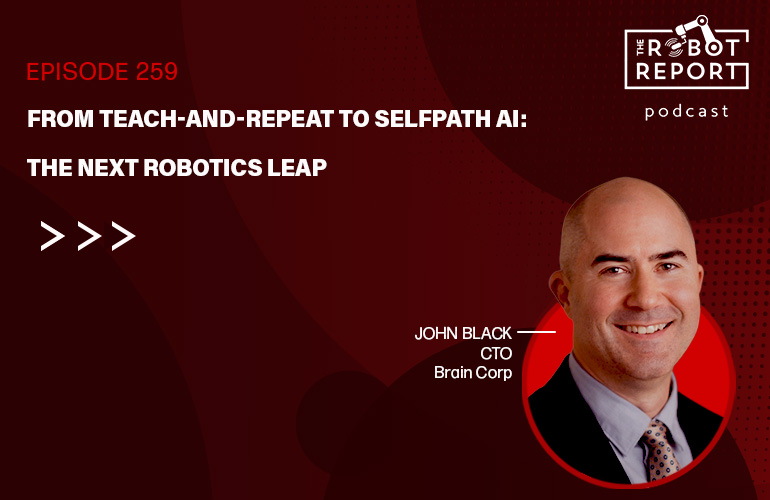
From Teach and Repeat to SelfPath AI: Building Trust for Robot Fleets

What happened

In a recent post on The Robot Report, John Black, chief technology officer at Brian Corp, offered his perspective on building trust for robotics fleets and AI.

The article, titled 'From teach and repeat to SelfPath AI: The next robotics leap,' presents the evolution from conventional teach-and-repeat methods toward an AI-driven approach known as SelfPath AI.

Why it matters

As robotics fleets become more prevalent, earning operator trust is likely to be critical for the adoption of AI-based systems.

Shifting from fixed routines to adaptive AI could make robots more flexible, but ensuring reliability remains a central challenge.

Key facts

John Black is the chief technology officer at Brian Corp.

The article shares insights on building trust for robotics fleets and AI.

The post is titled 'From teach and repeat to SelfPath AI: The next robotics leap.'

The article was published on The Robot Report.

What to watch next

Further details on SelfPath AI and its potential impact on robotics autonomy may emerge in future coverage.

Observers will likely watch how Brian Corp applies these trust-building principles in real-world fleet deployments.

Sources

Read → Keep scrolling for the next story
Robotics · 2 d ago

Deere Overcomes Q3 Headwinds, Beats Forecasts, and Teams with Reservoir on $10M AI Initiative

What happened

Deere reported third-quarter results that faced notable headwinds, yet the company managed to outperform market expectations.

In addition to beating Q3 forecasts, Deere raised its full-year guidance, signaling confidence in its near-term outlook.

The company also announced a research and development partnership with Reservoir, committing $10 million to an agricultural technology AI initiative.

Why it matters

The combination of raised guidance and a new AI-focused R&D partnership suggests that Deere is doubling down on technology investments even as it navigates operational challenges.

This move could signal a broader trend among agricultural equipment makers to leverage AI for precision farming and efficiency gains, potentially reshaping the competitive landscape.

Key facts

Deere faced headwinds during its Q3 update.

Deere beat Q3 expectations and raised guidance.

Deere partnered with Reservoir on a $10 million agtech AI initiative.

What to watch next

Observers will be watching whether the Reservoir partnership yields tangible AI-driven products or services in the agricultural sector.

It remains to be seen if Deere's raised guidance holds up as the company continues to contend with the headwinds mentioned in the update.

Sources

Read → Keep scrolling for the next story
Robotics · 2 d ago

EXL acquires physical AI developer iMerit

What happened

EXL has acquired iMerit, a developer of physical AI models.

Executives from both companies explained that their combined expertise and platforms will help developers build reliable physical AI.

Why it matters

The acquisition unites complementary strengths in AI technology and physical systems, potentially giving developers a more integrated path to dependable physical AI solutions.

Reliable physical AI is critical as robots and autonomous systems become more embedded in real-world environments, and the combined offering aims to address that need.

Key facts

EXL acquired iMerit.

iMerit is a physical AI model developer.

Executives said the combined expertise and platforms will help developers with reliable physical AI.

What to watch next

How the merged company's platform evolves to support physical AI reliability.

Whether other firms pursue similar acquisitions to strengthen their physical AI capabilities.

Sources

Read → Keep scrolling for the next story
Robotics · 2 d ago

Video Friday: Meet Microduck

What happened

This week's Video Friday from IEEE Spectrum robotics collects a variety of robot videos, with a featured spotlight on a new compact robot called Microduck.

Microduck is a 25 cm, 780 g robot that waddles, falls, gets back up, and learns new tricks. It packs 15 degrees of freedom, a front camera, an 8x8 LiDAR, two IMUs, microphones, a speaker, NFC, Wi-Fi, and Bluetooth. Out of the box, it can walk, sit, crouch, roller skate, pick up objects with its articulated beak, and recover from falls on its own.

The robot can be driven with a game controller, accepts accessories and NFC-tagged objects, runs autonomous behaviors, and can be gathered with others for races and football. Its software is fully open source, with pre-orders at $399 and shipping before Christmas. The roundup also notes that NVIDIA paid US$12.9 billion for the company that acquired Pollen Robotics, suggesting a connection to Microduck.

Why it matters

Microduck's low $399 price and open-source software could make advanced robotics accessible to hobbyists, educators, and researchers, lowering the barrier to experimentation.

Including LiDAR, multiple sensors, and autonomous capabilities in a small, affordable robot signals a trend toward feature-rich platforms at consumer-friendly prices.

The reported NVIDIA acquisition hints at growing commercial interest in agile, versatile robots like Microduck, potentially accelerating development and adoption in the robotics sector.

Key facts

Microduck is a 25 cm, 780 g robot with 15 degrees of freedom, a front camera, 8x8 LiDAR, two IMUs, mics, speaker, NFC, Wi-Fi, and Bluetooth.

Out of the box, Microduck walks, sits, crouches, roller skates, picks up objects with its articulated beak, and recovers from falls.

Microduck is available for pre-order at $399, ships before Christmas, and its software is fully open source.

What to watch next

Watch for Microduck shipments before Christmas and the community projects that emerge around its open-source software.

Expect IEEE Spectrum's Video Friday to continue featuring new robotics videos, including DARPA Lift Challenge and other innovations mentioned in this week's roundup.

Keep an eye on NVIDIA's robotics moves following its reported $12.9 billion acquisition, which may influence the future of compact robots like Microduck.

Sources

Read → Keep scrolling for the next story
罗永浩@luoyonghao · AIBID #1

【严肃提醒】我从未参与、推广或代言任何虚拟货币项目。所有使用我名字、头像或形象的账号均为假冒,请勿相信任何相关投资信息。

♡ 738 💬 690 ↻ 18
Details →
Robotics · 2 d ago

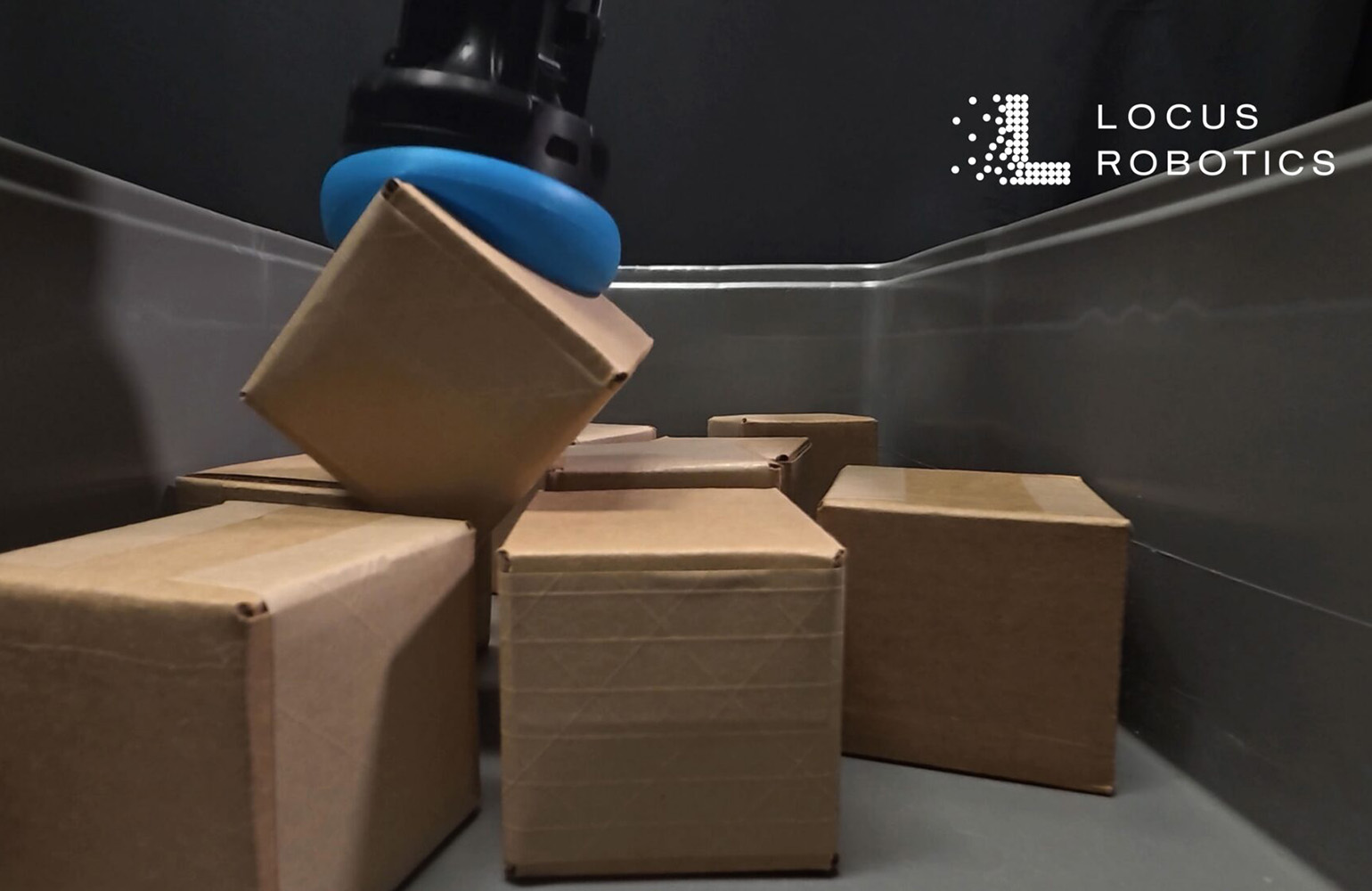
Locus Robotics acquires Nexera to strengthen robotic manipulation

What happened

Locus Robotics has completed the acquisition of Nexera Robotics, a company known for its distinctive soft picking technology.

The move is intended to improve Locus' abilities in robotic manipulation, an area widely regarded as one of the hardest challenges in the field.

According to The Robot Report, the acquisition directly bolsters Locus' manipulation capabilities with Nexera's unique approach.

Why it matters

Robotic manipulation—particularly picking items that are irregular, fragile, or variable—remains a major hurdle for warehouse automation.

By integrating Nexera's soft picking tech, Locus could expand beyond standard box handling into more complex picking tasks, potentially widening its market reach.

This acquisition signals a strategic push to solve a core robotics problem through specialized technology rather than incremental in-house development.

Key facts

Locus Robotics recently acquired Nexera Robotics.

Nexera Robotics creates unique soft picking technology.

The acquisition bolsters Locus' manipulation capabilities.

What to watch next

Whether the combined technology will be integrated into Locus' existing warehouse robots or appear as a new product line.

How competitors in the robotics space respond to Locus' strengthened manipulation portfolio.

Sources

Read → Keep scrolling for the next story
Robotics · 6 d ago

AI Companion Robots Are Closing the Human Connection in Modern Homes

What happened

Early companion robots, introduced around 2017, offered personality and interaction but were limited to simple voice commands and narrow functions, often ending up unused once the novelty faded.

When some of these companies shut down their servers, owners compared the loss to losing a pet, highlighting the emotional bonds formed.

Today's companion robots are being designed with psychological research and clinical insight, shifting from reactive to proactive responses, from function-oriented to emotion-oriented design, and from standalone hardware to connected ecosystems.

Why it matters

Loneliness is a widespread issue, with studies showing that nearly one in three elderly adults lives alone, and children of migrant workers are 2.5 times more likely to experience loneliness.

Previous technologies like video calls and smart speakers have failed to create presence; they only schedule communication between people who already have relationships.

The AI companion market is projected to grow significantly, from $48 billion in 2026 to $318 billion by 2033, indicating a major shift in how technology addresses emotional needs.

Key facts

Nearly one out of three elderly adults resides alone, according to one study.

Children whose parents have migrated for work were 2.5 times more likely to experience loneliness.

The global AI companion market was valued at US $36.8 billion in 2025 and is projected to reach $318 billion by 2033.

Modern companion robots use cameras, microphones, and sensors to initiate interactions and detect emotions.

What to watch next

Watch for how the concept of 'gentle intelligence' shapes future companion robots, focusing on presence rather than raw capability.

Observe whether these robots can maintain long-term engagement and truly reduce loneliness in real-world settings.

Look for integration with remote access and life recording features, as seen in products like OlloNi SS1, to see how they balance convenience with privacy.

Sources

Read → Keep scrolling for the next story
Robotics · 6 d ago

Self-Driving Cars Could Someday Take Requests

What happened

Researchers at TU Delft have developed a system that uses a large language model to translate natural-language requests, such as 'I am running late, go fast,' into adjustments to a self-driving control system.

The system tunes parameters of a safety-aware motion-planning algorithm, keeping the vehicle within safe bounds, and asks passengers to confirm changes before implementing them.

In simulations, the system adjusted speed and smoothness according to natural-language instructions, as reported in a preprint and presented at the IEEE Intelligent Transportation Systems Conference.

Why it matters

This approach could make autonomous vehicles more user-friendly by allowing passengers to customize driving style without compromising safety.

Unlike direct LLM control, this method retains deterministic performance guarantees, addressing challenges like slow response times and lack of safety assurances.

It represents a step toward human-in-the-loop personalization, where users can communicate preferences naturally.

Key facts

The system uses an LLM to translate natural-language user requests into adjustments to a self-driving control system.

It tunes parameters of a safety-aware motion-planning algorithm and asks for passenger confirmation before changes.

The research was posted on arXiv and presented at the IEEE Intelligent Transportation Systems Conference in September.

What to watch next

Future integration of perception systems to automatically generate scenario descriptions, reducing reliance on handwritten inputs.

Potential expansion to more complex driving scenarios and real-world testing beyond simulations.

Development of similar personalization features in commercial autonomous vehicles.

Sources

Read → Keep scrolling for the next story
Robotics · 6 d ago

What It Takes to Be an Adaptable Engineer

What happened

The AI boom has disrupted engineering work, introducing new tools, raising expectations, and making hiring harder.

Samantha Brunhaver, an associate professor at Arizona State University, studies how to foster adaptability in young engineers, noting that universities rarely explain what adaptability means in practice.

Reports from PwC and the World Economic Forum indicate that skills are changing rapidly across industries, with tech, media, and telecom seeing the fastest turnover.

Why it matters

As AI reshapes engineering roles, the ability to adapt is becoming a critical skill, yet it is often vaguely defined and context-dependent.

Understanding adaptability can help educators and employers better prepare engineers for a volatile job market.

Key facts

Brunhaver defines adaptability as 'the ability to recognize that a change or uncertainty is occurring, and then respond effectively to that change.'

A June 2026 PwC report found that tech, media, and telecom jobs have the fastest pace of skill turnover.

The World Economic Forum's 2025 Future of Jobs Report expects 39% of workers' core skills to change by 2030.

What to watch next

How universities incorporate adaptability training into curricula, such as through internships and reflective practices.

Whether employers will adopt clearer definitions of adaptability to guide hiring and development.

Sources

Read → Keep scrolling for the next story
Robotics · 9 d ago

Webinar to Show How Agentic AI Speeds Root Cause Analysis in Semiconductor Fabs

What happened

The webinar, described in an IEEE Spectrum listing, focuses on accelerating root cause analysis when yield issues arise. It notes that critical clues are typically scattered across metrology data, tool traces, chemical analysis, and facilities systems, while growing data volumes make traditional dashboards slow and fragmented.

Attendees will see a live demonstration of a multi-domain root cause investigation using Spotfire Industry Pro. The session is meant to show how Agentic AI, semiconductor-specific visualizations, and push-down compute enable faster investigation of yield excursions and process issues, even across billions of data points.

Why it matters

Siloed manufacturing data is presented as a key problem: it delays yield recovery and inflates costs. For yield, process, and integration engineers, as well as fab and operations managers, the ability to connect insights across domains without moving data could mean faster, more confident decisions during yield excursions.

The webinar targets roles supporting wafer fabs, foundries, OSATs, and IDMs, indicating that the issue of fragmented data and slow root cause analysis is a broad industry pain point. Automating cross-domain analytics may help teams maintain confidence while acting on massive datasets.

Key facts

Yield issues rarely have answers in a single system; clues are spread across metrology data, tool traces, chemical analysis, and facilities systems.

The webinar will feature a live demonstration of a multi-domain root cause investigation using Spotfire Industry Pro.

The stated takeaways include understanding why siloed manufacturing data delays yield recovery and inflates costs, and how Agentic AI automates complex cross-domain analytics and visualization generation.

What to watch next

The live demonstration is expected to show how engineers can conduct a root cause investigation spanning multiple domains without moving data, using Spotfire Industry Pro.

The session will also cover methods for scaling high-performance analytics across massive fab datasets, which could be relevant for teams dealing with billions of data points.

Registration for the free webinar is open, suggesting a practical walkthrough of the platform's capabilities for semiconductor-specific root cause analysis.

Sources

Read → Keep scrolling for the next story
Ray Wang@anytutorai · AIBID #2

https://t.co/54FDzGhNxO AI中转站,免订阅送点数,无需翻墙,十美金起暢享最強CLAUDE與GPT模型,不封號,也可以直接使用GPT一樣AI對話服務。可开票,无套路,BASE东京的中转站,不参水原价,打的就是十美金小额用顶部模型,

♡ 1 💬 1 ↻ 0
Details →
Centralized vs. Decentralized Power in Swarm Robotics: A Hybrid Path Forward
Robotics · 1 d ago · 4

Centralized vs. Decentralized Power in Swarm Robotics: A Hybrid Path Forward

Swarm robots often use centralized or decentralized power, but hybrids may combine benefits.

Read →
From Teach and Repeat to SelfPath AI: Building Trust for Robot Fleets
Robotics · 2 d ago · 1

From Teach and Repeat to SelfPath AI: Building Trust for Robot Fleets

Brian Corp CTO John Black discusses building trust in robotics fleets and AI.

Read →
Deere Overcomes Q3 Headwinds, Beats Forecasts, and Teams with Reservoir on $10M AI Initiative
Robotics · 2 d ago · 2

Deere Overcomes Q3 Headwinds, Beats Forecasts, and Teams with Reservoir on $10M AI Initiative

Deere beats Q3 forecasts, lifts guidance, and launches a $10M agtech AI project with Reservoir.

Read →
EXL acquires physical AI developer iMerit
Robotics · 2 d ago · 5

EXL acquires physical AI developer iMerit

EXL acquires iMerit, aiming to combine expertise and platforms for reliable physical AI.

Read →
Video Friday: Meet Microduck
Robotics · 2 d ago · 1

Video Friday: Meet Microduck

IEEE Spectrum's Video Friday roundup introduces Microduck, a small open-source robot with big capabilities.

Read →
Locus Robotics acquires Nexera to strengthen robotic manipulation
Robotics · 2 d ago · 2

Locus Robotics acquires Nexera to strengthen robotic manipulation

Locus Robotics buys Nexera Robotics to boost its soft-picking manipulation tech.

Read →
AI Companion Robots Are Closing the Human Connection in Modern Homes
Robotics · 6 d ago

AI Companion Robots Are Closing the Human Connection in Modern Homes

A new generation of AI companion robots aims to combat loneliness with proactive, emotion-focused design.

Read →
Self-Driving Cars Could Someday Take Requests
Robotics · 6 d ago

Self-Driving Cars Could Someday Take Requests

Researchers use LLMs to let passengers adjust self-driving style via natural language.

Read →
What It Takes to Be an Adaptable Engineer
Robotics · 6 d ago · 2

What It Takes to Be an Adaptable Engineer

Engineers face rapid change; adaptability is key but often undefined.

Read →
Webinar to Show How Agentic AI Speeds Root Cause Analysis in Semiconductor Fabs
Robotics · 9 d ago · 7

Webinar to Show How Agentic AI Speeds Root Cause Analysis in Semiconductor Fabs

A free webinar will demo Agentic AI for cross-domain yield root cause analysis without moving data.

Read →